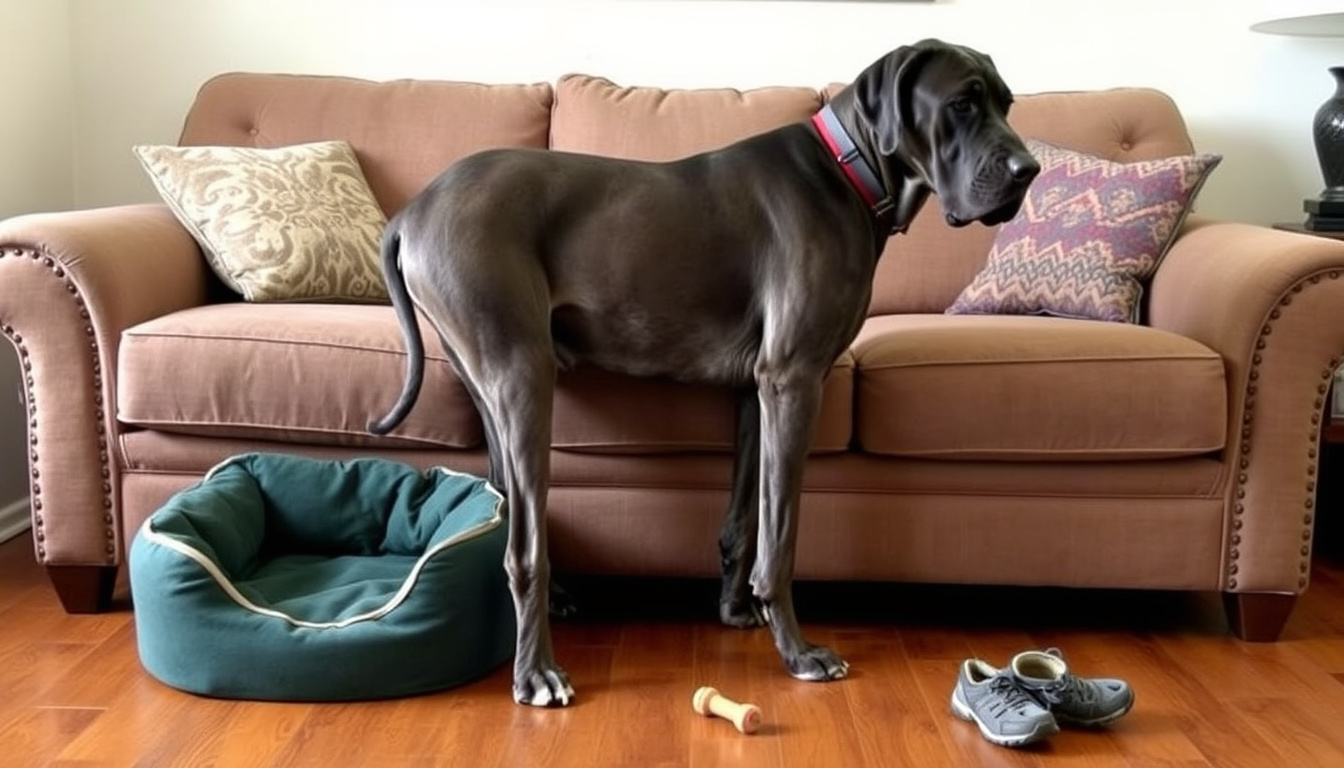
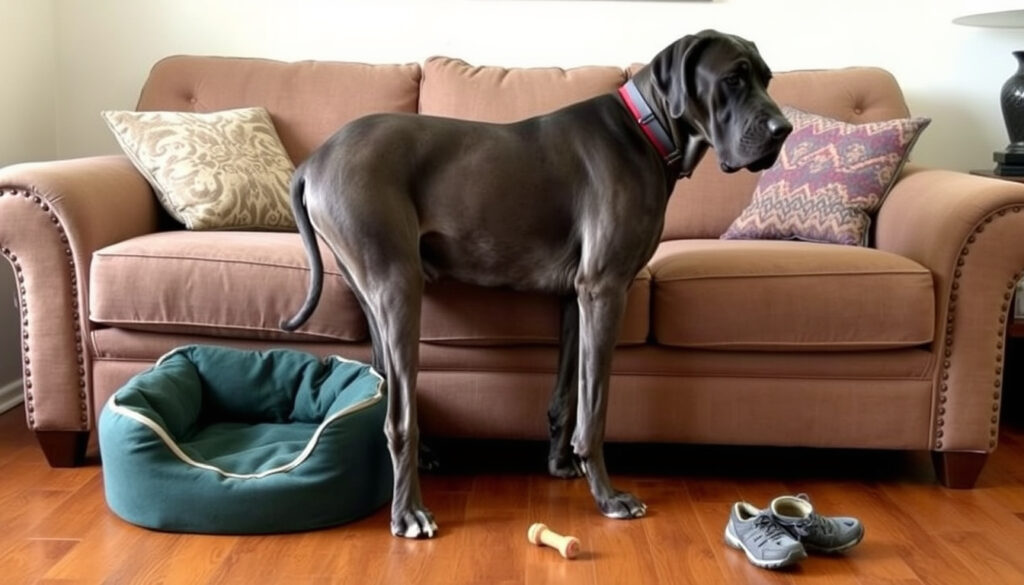
There’s a reason Great Danes are called gentle giants, but that affectionate nickname hides a few hard truths: few breeds offer such a devoted companion in an enormous package yet ask so much in return, from a short lifespan to a wallet that never recovers. This guide weighs the warmth against the costs so you can decide if the trade-off is worth it.
Average height: 28-32 inches at the shoulder ·
Average weight: 110-175 pounds ·
Lifespan: 7-10 years ·
Temperament: Friendly, patient, dependable ·
Energy level: Moderate
Quick snapshot
- Height: 28-32 inches (ASPCA Pet Insurance)
- Weight: 110-175 pounds (ASPCA Pet Insurance)
- Largest dog breed by height (ASPCA Pet Insurance)
- Friendly and patient
- Good with children
- Needs socialization
- 7-10 years average (Dane Haven Inc.)
- “Heartbreak breed” nickname (Dane Haven Inc.)
- Health issues shorten life (Dane Haven Inc.)
- Purchase: $1,000–$3,000 (Antry Danes)
- Annual food: $1,500+ (Antry Danes)
- Vet bills can be high (Antry Danes)
The breed standard reveals a striking combination of size and elegance. Here are the core specs:
| Attribute | Details |
|---|---|
| Origin | Germany (Wikipedia) |
| AKC Group | Working |
| Coat | Short, smooth; colors: fawn, brindle, black, blue, harlequin, mantle |
| Exercise need | Moderate – 1-2 hours daily |
| Grooming | Low – weekly brushing |
What is the downside to owning a Great Dane?
The most immediate downside is the short lifespan — 7 to 10 years, with many Great Danes not reaching the upper end. ASPCA Pet Insurance cites an average of 6–8 years, a reality that earns the breed its “heartbreak” label. Beyond the emotional toll, the financial cost is extreme.
High cost of ownership
- A purebred puppy from a reputable breeder runs $1,000 to $3,000, according to Antry Danes.
- An adult eats about 60 pounds of food per month, costing around $95 — more if raw or premium food is used, according to a YouTube breed guide.
- Extra-large collars, harnesses, beds, and crates push costs higher; veterinary emergencies for giant breeds are especially expensive (Dane Haven Inc.).
Space and exercise requirements
Although they are often described as “couch potatoes,” Great Danes still need a couple of short walks daily and time to run, per Dane Haven Inc. Their size means they need room to stretch — an apartment can work if the dog is genuinely low-energy, but a house with a yard is more practical.
Common health issues
- Bloat (gastric dilatation-volvulus) is the number one killer, according to Dane Haven Inc.
- Other concerns: dilated cardiomyopathy, Wobbler syndrome, hypothyroidism, orthopedic conditions, and bone cancer (Dane Haven Inc.).
- Early socialization helps prevent the territorial tendencies that can arise without training (American Kennel Club (breed authority)).
The implication: Great Danes require a serious commitment of time and money.
Why are Great Danes called the heartbreak breed?
The nickname is brutal because it is accurate. The emotional cost of loving a dog that lives roughly half as long as a Labrador is substantial.
Short lifespan explained
Most sources converge on an average of 7–10 years. ASPCA Pet Insurance notes 6–8 years, while Dane Haven Inc. gives 8–10 years, occasionally reaching 13. Compared with small breeds that often live into the teens, that gap is painful.
Emotional impact on owners
The breed bonds intensely. Because they are so devoted to their families, loss hits especially hard. A YouTube breed guide warns that their tendency toward separation anxiety stems from that deep attachment — the same trait that makes them so loving makes the eventual goodbye crushing.
How to cope with early loss
Responsible breeding and proactive health care can stretch the clock. Regular vet checkups, a controlled diet, and early bloat prevention (like gastropexy) are standard recommendations from Dane Haven Inc. Still, owners should mentally prepare for a shorter journey.
“Great Danes are one of the tallest dog breeds, with males standing at least 30 inches at the shoulder, yet their hearts are as big as their frames.”
The pattern is that emotional attachment makes the short lifespan especially painful, but proactive care can help.
Is Great Dane a good family dog?
Yes — with caveats. The breed’s temperament is famously gentle, but its size means supervision is non‑negotiable around small children.
Temperament with children
ASPCA Pet Insurance calls them a “wonderful family dog.” They are patient, affectionate, and rarely aggressive. However, a wagging tail at waist height can knock a toddler over, and an accidental bump can cause injury.
Size and safety considerations
Homes with hardwood floors pose slipping risks for the dog itself. For kids, the rule is simple: never leave a Great Dane unsupervised with a child under 5. Training both the dog and the child is essential.
Socialization needs
Because they can be wary of strangers, early and ongoing socialization is critical. Antry Danes emphasizes that a well‑socialized Great Dane greets visitors with a tail wag, not a bark.
A family that invests in socialization and respects the dog’s size gets a gentle, loyal protector. Families that skip training may find a territorial 150‑pound dog difficult to manage.
The catch is that size demands constant supervision with children.
Can a Great Dane be left alone for 8 hours?
Generally, no. Their social nature makes long stretches alone stressful.
Separation anxiety risk
Great Danes are prone to separation anxiety because they bond deeply (YouTube breed guide). A 9‑to‑5 workday without a midday break can lead to destructive behavior, barking, or depression.
Exercise and bathroom needs
A full day without a walk is impractical. They need a morning walk, a midday potty break, and an evening outing at minimum. Crate training can help, but no crate should hold a Great Dane for 8 consecutive hours without relief.
Alternatives for busy owners
Doggy day care, a dog walker, or a neighbor’s visit are solutions, but they add cost. For owners who are away for the typical workday, this breed is a poor fit unless arrangements are made.
If you can’t arrange a midday break, choose a breed that tolerates longer alone time. A Great Dane left alone for 8 hours daily may develop costly separation behaviors and decreased quality of life.
What this means: busy owners should consider alternative arrangements.
Are Great Danes friendly?
Extremely. The breed standard describes them as friendly, outgoing, and non‑aggressive toward people and other animals.
Temperament toward strangers
ASPCA Pet Insurance notes that proper socialization prevents the territorial wariness that can surface. With training, they greet strangers like old friends.
Getting along with other pets
They generally do well with other dogs and cats, especially if raised together. Early exposure to different animals is key, as recommended by Dane Haven Inc.
Friendly but protective nature
While not guard dogs, they may alert bark at unfamiliar noises. Their size alone is often enough to deter intruders. The American Kennel Club calls them “a gentle giant who can also be a guardian.”
Five key specs, one pattern: the Great Dane is a giant breed with a short lifespan but a friendly temperament that makes every year count.
| Attribute | Value |
|---|---|
| Height (male) | 30–34 inches |
| Weight (male) | 140–200 pounds |
| Height (female) | 28–32 inches |
| Weight (female) | 110–140 pounds |
| Life expectancy | 7–10 years |
| Coat type | Short, smooth |
| Color varieties | Fawn, brindle, black, blue, harlequin, mantle |
| AKC Group | Working |
| Origin | Germany |
| Exercise needs | Moderate (1–2 hrs/day) |
| Grooming | Low (weekly brushing) |
What this means: the Great Dane is a breed of extremes — immense size, short life, low maintenance coat, and a need for companionship that can’t be compromised.
Upsides
- Exceptional temperament – friendly, patient, good with children
- Low grooming needs
- Surprisingly suited to apartments if exercised properly
- Loyal and protective without being aggressive
Downsides
- Short lifespan (7–10 years) – emotional toll is high
- High cost – purchase, food, vet bills, gear
- Serious health risks (bloat, hip dysplasia, heart conditions)
- Cannot be left alone for full workdays
- Size can be unsafe around small children if unsupervised
Confirmed facts
- Great Danes are among the tallest dog breeds (Wikipedia).
- Average lifespan is 7–10 years (ASPCA Pet Insurance).
- They are generally friendly and good with families (ASPCA Pet Insurance).
What’s unclear
- Exact impact of breeding on lifespan extension – some breeders report longer lives, but data is limited.
- Prevalence of separation anxiety in the breed – reported anecdotally but not systematically studied.
“The Great Dane combines size and elegance with a gentle, affectionate nature that makes them a wonderful family dog when properly trained.”
“Owners need to be prepared for a dog that is both a couch potato and an athlete – a couple of short walks a day plus a chance to run are ideal.”
— Dane Haven Inc. (breed rescue organization)
“Great Danes were originally bred for boar hunting in Germany, but today they are best known as gentle companions.”
— Wikipedia
The Great Dane delivers an extraordinary experience: a massive, loving dog that fills a home with warmth and laughter. But the clock starts ticking faster than with almost any other breed. For a family in the market, the choice is clear: commit fully to the cost, the space, and the eventual heartbreak — or choose a breed that will outlive the mortgage. There is no middle ground.
See also: Can Dogs Eat Grapes? Symptoms, Risks & When to Call a Vet and Silverback Gorilla: Size, Strength, Behavior, and Key Facts.
If you’re weighing the decision, a thorough Great Dane breed guide can help clarify both the joys and the challenges of owning this gentle giant.
Frequently asked questions
Do Great Danes drool a lot?
Yes, many Great Danes drool, especially after drinking or eating. It is a breed trait that owners must accept.
How much does a Great Dane puppy cost?
A reputable breeder charges $1,000 to $3,000, depending on location, pedigree, and breeder reputation (Antry Danes).
Are Great Danes good with other dogs?
Generally yes, especially if socialized early. They are pack‑oriented and can coexist peacefully with other dogs and cats (Dane Haven Inc.).
How much exercise does a Great Dane need daily?
Moderate – about 1–2 hours total, split into walks and playtime. They are not hyperactive but need consistent activity (ASPCA Pet Insurance).
What health problems are common in Great Danes?
Bloat (GDV) is the most serious; others include hip dysplasia, dilated cardiomyopathy, Wobbler syndrome, and certain cancers (Dane Haven Inc.).
Are Great Danes easy to train?
Yes, they are intelligent and eager to please, but their size demands consistent training from puppyhood. Early socialization is crucial (American Kennel Club (breed authority)).
Do Great Danes bark a lot?
They are not excessive barkers, but they will alert bark at strangers or unusual sounds. Proper training keeps barking under control.

Jack Hayes is Senior Reporter at Australia Data, covering breaking stories and explainers.