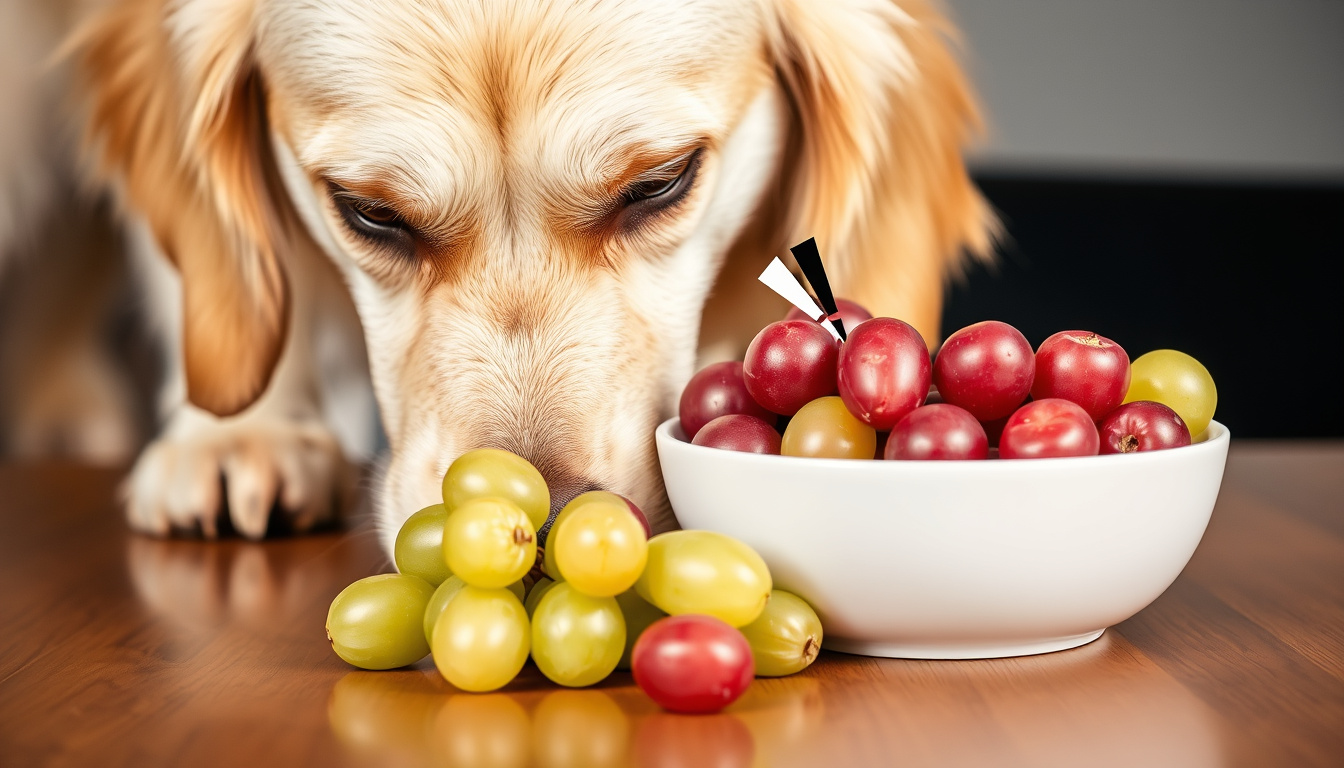

Grape toxicity in dogs is one of those mysteries that vets wish they didn’t have to deal with so often. The strange part: no one has definitively identified the exact compound that makes grapes dangerous, yet the danger itself is backed by decades of clinical evidence and veterinary consensus.
Grape toxicity in dogs: All types of grapes and raisins can cause kidney failure in dogs ·
Toxic amount: Even one grape can be lethal to some dogs, but not all ·
Onset of symptoms: Usually within 6–12 hours after ingestion ·
Veterinary treatment: Immediate decontamination and aggressive fluid therapy required ·
Prevalence: Grapes and raisins are among the top 10 dog poisonings reported to Pet Poison Helpline
Quick snapshot
- Grapes and raisins can cause acute kidney failure in dogs (Berwick Vet)
- All grape varieties (organic, seeded, homegrown) are potentially toxic (VetGirl)
- Vomiting is the most common early symptom within 24 hours (Berwick Vet) (Berwick Vet)
- Immediate veterinary decontamination improves survival rate (Cornell Riney Canine Health Center)
- The exact chemical compound responsible for toxicity remains unidentified (Merck Veterinary Manual)
- Why some dogs can eat grapes without apparent harm is not understood (Cornell Riney Canine Health Center) (Merck Veterinary Manual)
- The precise mechanism of kidney damage is still under investigation (VetGirl) (Merck Veterinary Manual)
- Symptoms appear 6–12 hours after ingestion (L&L Animal Urgent Care)
- Azotemia (kidney markers) can appear within 24 hours (VetGirl) (L&L Animal Urgent Care)
- Severe kidney failure signs develop 24–72 hours post-ingestion (Berwick Vet) (L&L Animal Urgent Care)
- If ingestion just occurred: call vet or Pet Poison Helpline (MetLife Pet Insurance)
- Decontamination (vomiting + activated charcoal) within 2–12 hours (Vet Times)
- IV fluid therapy for 48–72 hours to protect kidneys (VetGirl) (MetLife Pet Insurance)
Here are the key facts about grape toxicity at a glance.
| Fact | Detail |
|---|---|
| Toxic part of grape | The entire fruit, including skin and seeds (Merck Veterinary Manual) |
| Timeframe for toxicity | Symptoms appear 6–12 hours after ingestion (Berwick Vet) |
| Minimum toxic dose | No established safe dose; even 1 grape can be toxic (Cornell Riney Canine Health Center) |
| Primary veterinary resource | Pet Poison Helpline: 800-213-6680 (MetLife Pet Insurance) |
| Survival rate with treatment | High if treated early before acute kidney failure (VetGirl) |
What happens if my dog eats a grape?
Immediate signs of grape poisoning
The most common early symptom is vomiting, which typically begins within 6–12 hours of ingestion, according to Berwick Vet (veterinary clinic). Owners may also notice diarrhea, lethargy, and abdominal pain. Some dogs become excessively thirsty or, paradoxically, stop drinking entirely. The range of symptoms varies, but vomiting is the hallmark early signal.
A dog that vomits after eating grapes has already absorbed some toxins. Waiting to see if symptoms “pass” can cost precious time — kidney damage progresses silently for the first 24 hours.
Long-term kidney damage risk
When kidney failure sets in, blood tests show elevated creatinine and BUN (azotemia), often within 24 hours of ingestion, reports VetGirl (veterinary education platform). If untreated, the dog may become oliguric (producing little urine) or anuric within 48–72 hours, a stage where dialysis may be the only option — and many clinics lack the equipment. The Merck Veterinary Manual (authoritative veterinary reference) notes that ingestion of grapes, raisins, Zante currants, and tamarinds is linked to anuric renal failure.
The implication: even a single grape can trigger a cascade that ends with permanent kidney damage, and there’s no way to predict which dogs are susceptible.
What fruit can dogs not eat?
Grapes and raisins
Grapes of all colors — purple, red, green, white — are toxic to dogs of all ages, as confirmed by Merck Veterinary Manual. Raisins, being dried grapes, are even more concentrated and pose a higher exposure risk because they appear in baked goods, trail mixes, and cereals.
Other toxic fruits for dogs
- Cherries — pits contain cyanide and can cause intestinal obstruction (L&L Animal Urgent Care)
- Avocado — the pit and skin are toxic; the flesh is high in fat and can cause pancreatitis (Merck Veterinary Manual)
- Unripe persimmons — can cause intestinal blockage similar to that of grape seeds (MetLife Pet Insurance)
A safer alternative: small pieces of apple (no seeds), banana, or blueberries are generally fine for most dogs, but always check with your vet first.
The pattern: fruits that are safe for humans are often risky for dogs. Grapes are uniquely dangerous because the toxin is still unidentified, making the risk unpredictable.
What happens if my dog eats a raisin?
Raisin toxicity compared to grapes
Raisins are simply dried grapes, which means the toxic compounds are more concentrated per gram. According to Berwick Vet, raisins pose a higher exposure risk because they are hidden in muffins, cookies, and children’s snacks. A single raisin can be more dangerous than a single grape on a weight basis.
Why raisins are even more concentrated
During drying, water evaporates and the toxic principle — whatever it is — becomes more concentrated. The Vet Times (veterinary news service) notes that grapes can remain in a dog’s stomach for up to 12 hours, giving a wider window for emesis. But raisins may absorb stomach fluids and swell, potentially causing obstruction in addition to toxicity. The toxic effects are identical; the risk is simply higher per piece.
Because the toxic dose is unknown, every raisin counts. A dog that steals a single oatmeal-raisin cookie should be treated as a medical emergency, even if it seems fine at the moment.
What this means: never assume a small amount is safe. Concentration — whether in raisins, sultanas, or currants — amplifies the danger.
Can dogs eat 1 or 2 grapes?
Is there a safe amount of grapes for dogs?
No. The Cornell University Riney Canine Health Center (veterinary research institution) states that no safe amount has been established. Even one or two grapes have been reported to cause acute kidney injury in some dogs. The Pet Poison Helpline logs cases where a single grape was fatal — and others where a dog ate a whole bunch with no symptoms. The unpredictability makes any ingestion a potential emergency.
Why individual dog sensitivity varies
Researchers have not identified why some dogs tolerate grapes. Theories include differences in metabolism, gut microbiome, or even the specific batch of grapes (some may carry higher toxin concentrations). The Merck Veterinary Manual describes the toxicity as “unpredictable,” meaning no dog should be considered safe. The only rational approach: treat every ingestion as serious.
The trade-off: saving a handful of grapes is not worth the lifetime cost of kidney dialysis or the loss of your pet.
What are the symptoms of dog eating grapes?
Early symptoms within 6–12 hours
- Vomiting (most common) — Berwick Vet
- Diarrhea — L&L Animal Urgent Care
- Lethargy and weakness — VetGirl
- Abdominal pain (whining, hunched posture) — L&L Animal Urgent Care
- Excessive thirst or decreased appetite — Berwick Vet
Later signs of kidney failure
Within 24–48 hours, dogs may develop oliguria (decreased urine output) or anuria (no urine production). Other late-stage signs include foul breath (uremic halitosis), seizures, and coma. Blood work shows elevated creatinine and BUN. The VetGirl educational blog reports that oliguria/anuria typically occurs 48–72 hours after ingestion.
Why this matters: once urine output drops, the kidneys are in acute distress. Emergency dialysis is rarely available; aggressive fluid therapy started within 24 hours gives the best chance of survival.
What we know — and what we don’t
Confirmed facts
- Grapes and raisins are toxic to dogs — Merck Veterinary Manual
- All colors and varieties of grapes are dangerous — VetGirl
- Toxic effects include acute kidney injury and death — Berwick Vet
What’s unclear
- The exact chemical compound responsible for toxicity — Merck Veterinary Manual
- Why some dogs can eat grapes without apparent harm — Cornell Riney Canine Health Center
- The precise mechanism of kidney damage — VetGirl
- Even one grape can be lethal to some dogs — Cornell Riney Canine Health Center
“Grapes of all colors (purple, red, green, white) can be toxic to dogs of all ages.”
— Veterinary expert at PetMD (veterinary information platform)
“Dogs cannot eat peeled or seedless grapes or raisins in any amount.”
— Purina (pet food manufacturer and nutrition resource) veterinarian
Steps to take if your dog eats a grape
Immediate emergency actions
- Stay calm and call your vet or Pet Poison Helpline (800-213-6680). Time matters — Berwick Vet advises that grapes can remain in the stomach for up to 12 hours.
- Do not induce vomiting unless a vet instructs you. Improper use of hydrogen peroxide can cause complications.
- Bring the packaging or remaining grapes to the clinic so the vet can estimate the amount ingested.
- Expect decontamination: the vet may administer apomorphine (0.03 mg/kg IV or 0.04 mg/kg IM, per Vet Times) to induce vomiting, followed by activated charcoal (1–4 g/kg as a 20% slurry) to absorb residual toxins.
Treatment and monitoring
After decontamination, most dogs require hospitalization for 48–72 hours of intravenous fluid therapy to flush the kidneys and maintain blood pressure, as recommended by VetGirl. Blood tests are repeated daily to check kidney values. Dogs that remain asymptomatic for 72 hours with normal blood work are generally discharged.
For owners, the cost of emergency treatment can range from $500 to $3,000 depending on the clinic and length of stay. Some pet insurance policies cover poisoning cases — check your plan.
The catch: even with aggressive treatment, some dogs develop irreversible kidney damage. The best outcome comes from getting the dog to a vet within 2 hours of ingestion.
For any dog owner, the decision is clear: keep grapes, raisins, and all grape-containing products out of reach. A moment of curiosity from your dog can lead to a lifetime of kidney management or worse.
Acting swiftly gives your dog the best chance at recovery.
The consensus among veterinary bodies — Cornell University, Merck Veterinary Manual, and multiple veterinary practices — is that no amount of grapes is safe for dogs. The mystery of the unknown toxin doesn’t weaken that warning; it strengthens it. When you can’t predict the danger, the only responsible choice is to avoid it entirely. For your dog, the risk of kidney failure from a single grape far outweighs any momentary treat.
Frequently asked questions
What should I do if my dog ate a grape but shows no symptoms?
Call your veterinarian immediately. Many dogs show no early symptoms yet still develop kidney failure. A vet can advise whether to induce vomiting or start monitoring. Don’t wait for symptoms to appear.
Can grape toxicity cause permanent kidney damage in dogs?
Yes. Acute kidney injury from grapes can lead to permanent loss of kidney function, especially if treatment is delayed. Some dogs require lifelong dietary management or dialysis.
How long after eating grapes do dogs get sick?
Most dogs show symptoms within 6–12 hours, with vomiting being the first sign. Kidney failure indicators like decreased urination may take 24–48 hours to develop.
Are there any fruits that are safe for dogs to eat?
Yes — small amounts of apple (seeds removed), blueberries, banana, and watermelon (rind removed) are generally safe. But always confirm with your vet, as some dogs have allergies or sensitivities.
Is vomiting enough to treat grape poisoning in dogs?
Vomiting alone does not guarantee the toxin has been fully removed. Activated charcoal is often given afterward to bind any remaining toxins in the digestive tract. Hospitalization for IV fluids is still usually required.
Can dogs eat any part of a grape without risk?
No. Every part of the grape — skin, flesh, seeds — is considered toxic. There is no safe portion or preparation method.
How much does emergency grape poisoning treatment cost?
Costs vary widely by clinic and region, typically ranging from $500 to $3,000 or more. This covers decontamination, IV fluids, blood work, and hospitalization. Pet insurance with poison coverage can help.
What other common foods are toxic to dogs?
In addition to grapes and raisins, foods that are toxic include chocolate, xylitol (artificial sweetener), onions, garlic, macadamia nuts, and alcohol. Always check the Merck Veterinary Manual’s food hazards list before sharing your snack.

Priya Mitchell leads fact-checking, source verification and corrections at Australia Data.