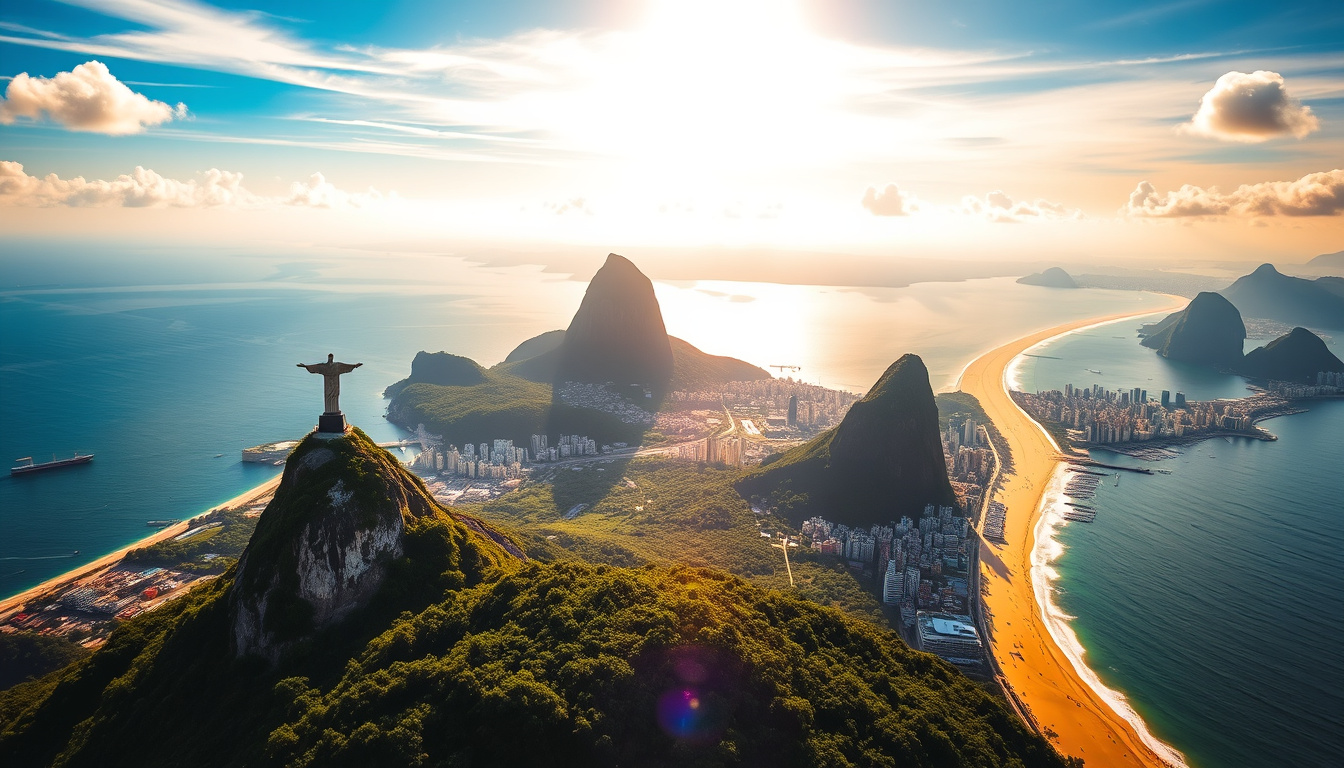
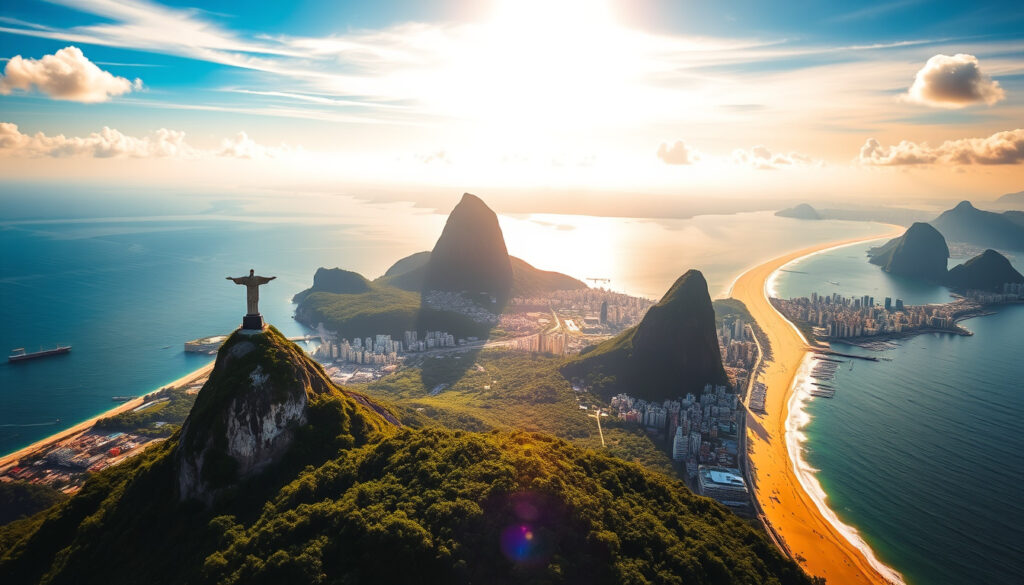
Few cities spark wanderlust quite like Rio de Janeiro. From the sweeping arc of Copacabana Beach to the statue of Christ the Redeemer silhouetted against a tropical sky, the city feels built for postcards. But if you’re planning an actual trip in 2025–2026, those same postcards don’t tell you what a hotel costs in February, which neighborhoods require extra vigilance, or when the weather actually cooperates. This guide cuts through the glossy version and gives you the real picture.
UNESCO Status: World Heritage Site for Urban Cultural Landscape ·
Ranking: One of most visited cities in Southern Hemisphere ·
Key Attractions: Christ the Redeemer, Sugarloaf, Carnival, Beaches
Quick snapshot
- Exact 2026 safety levels remain difficult to verify in real time
- Specific accommodation price ranges fluctuate weekly during peak events
- Summer high season runs December–February with temperatures hitting around 31°C (80s°F)
- Budget travelers save 40% or more visiting May–August versus peak summer
- Tourist numbers expected to keep climbing through 2026
- Best-value windows open March–May and September–October
| Detail | Information |
|---|---|
| Location | Southeastern Brazil, Atlantic Ocean coast |
| Status | Capital of Rio de Janeiro state |
| Recognition | UNESCO World Heritage Site (Urban Cultural Landscape) |
| Famous For | Beaches, Carnival, Samba, Bossa Nova |
| Population | Over 6.7 million |
| Summer Season | December–February (avg. high around 31°C / 80s°F) |
| Best Value Seasons | March–May and September–October |
| Brazil Travel Advisory | Level 2: Exercise Increased Caution |
Why is Rio de Janeiro so famous?
Rio earned its global reputation the old-fashioned way—it looks extraordinary from every angle. The city spreads across a landscape that seems designed for photography: mountains plunge into the Atlantic, neighborhoods cascade down hillsides, and beaches stretch for miles along a coastline that barely repeats itself.
Natural settings and beaches
The geography itself is a tourist asset. Rio sits where granite mountains meet the sea, creating neighborhoods like Copacabana and Ipanema that front onto some of the most recognizable waterfront in the world. Boardwalks stay busy, lively, and generally safe when plenty of people are around during the day, according to Saily (travel safety publication).
Carnival and samba culture
Carnival in Rio is not a sideshow—it’s the city’s defining cultural event, typically occurring in late February. Lonely Planet (authoritative travel guide) describes Rio’s summer festivals including New Year’s Eve and Carnaval as “once-in-a-lifetime experiences.” Those adjectives carry a cost: accommodation during Carnival books out months in advance and prices reach absurd highs.
Iconic landmarks like Christ the Redeemer
The 30-meter statue of Christ the Redeemer atop Corcovado Mountain is arguably the most recognizable image associated with Rio—and with Brazil itself. Timed entry tickets including the round-trip tram ride cost $22 USD per person, with opening hours from 8:00 AM to 7:00 PM daily, according to The Spunky Curl (travel blog). The landmark’s popularity is precisely why it also shows up as a crime hotspot in safety advisories, which we’ll address later.
The implication: Rio’s fame is genuinely earned on natural and cultural merits, but that fame is what drives both the crowds and the pickpockets.
Is Rio friendly for tourists?
Brazil consistently ranks among the more welcoming destinations in South America for foreign visitors. Brazilians tend to be relaxed about hosting travelers, and Rio specifically has built a hospitality infrastructure around tourism that spans decades.
Local attitudes toward foreigners
The U.S. State Department (federal travel authority) places Brazil under Level 2: Exercise Increased Caution—the same tier applied to countries like France, Italy, and the United Kingdom at various times, according to Saily. This framing matters: the advisory is calibrated to be proportionate, not alarming.
Hospitality in daily interactions
Brazil welcomed more than 6 million international visitors in 2024 and 9 million in 2025, with numbers expected to continue climbing, according to Saily. That’s not a destination that repels people. Service industry workers in tourist zones typically speak basic English, and locals generally don’t treat visitors with hostility. The catch: a warm greeting doesn’t mean an absence of street crime.
The trade-off: Brazilians are genuinely friendly, but “friendly” and “safe for your wallet at night” are separate questions.
Is Rio de Janeiro safe to visit?
This is the question that concerns visitors most, and it’s the one that requires the most careful calibration. The short answer from Saily (travel safety publication) is direct: Rio de Janeiro is generally safe for tourists in 2026, especially those sticking to main tourist areas, but the city has real crime issues that require ongoing awareness.
Safety in downtown areas
Centro, Rio’s downtown district, presents a useful case study. It’s generally fine during weekday business hours when office workers fill the streets. After hours and on weekends, Centro becomes quiet and deserted—and robberies become more likely. The pattern holds across many urban areas: populated and active equals safer, empty and quiet equals risk.
The U.S. State Department (federal travel authority) notes that violent crime including murder, armed robbery, and carjacking can occur in Brazilian urban areas day and night. The same advisory warns that assaults including with sedatives or drugs placed in drinks are a known tactic in Rio, with criminals targeting foreigners through dating apps or at bars.
2026 travel tips and advisories
The Government of Canada Travel Advice (official federal advisory) flags Complexo da Maré and Complexo da Penha as especially dangerous favela complexes with very high rates of violent crime and frequent large-scale police operations. The advisory adds a stark detail: tourists have been killed after accidentally entering certain favelas on foot or when following GPS directions while driving, because gangs strictly control access.
The British government highlights that theft and pickpocketing around major tourist spots such as Copacabana and Ipanema are the most common incidents affecting visitors, according to Saily. Crime hotspots identified by Jetpac Global (travel safety platform) include Christ the Redeemer statue area, the Corcovado Trail, Santa Teresa, and the Lapa neighbourhood.
U.S. government employees are advised not to use municipal buses in Brazil because of serious risk of robbery and assault, especially at night. That’s a notable data point for independent travelers.
Rio’s safety picture is genuinely neighborhood-dependent. The beaches are relatively secure during the day. The hillsides, back streets, and favela-adjacent areas require more judgment. Tourists who stay in established tourist zones, avoid displaying valuables, and don’t venture into unfamiliar neighborhoods after dark generally report positive experiences.
What this means: safety in Rio is conditional, not absolute. It rewards awareness and punishes complacency—but that’s true in most major cities.
Is Rio de Janeiro cheap or expensive?
Rio de Janeiro sits in an awkward middle ground for budget travelers. It’s not as cheap as some Brazilian cities, and it’s nowhere near as expensive as Paris or Tokyo, but the gap between high season and off-season pricing is dramatic enough to reshape what kind of trip is possible.
2025 budget breakdown
According to Go With Guide (travel planning resource), budget travelers can save 40% or more on flights and hotel rates during May to August compared to summer peak season. That’s a substantial swing—roughly $800–$1,200 on a typical week-long trip for two.
Cost of beer and daily expenses
Brazil’s currency and local pricing mean meals, transport, and drinks remain relatively affordable compared to North American or European equivalents. A beer at a beach bar might cost $2–$4 USD. Street food options in the $3–$6 range are common. But hotel rates during Carnival or New Year’s Eve can triple or quadruple, transforming what was a budget destination into an expensive one.
The difference between visiting in February versus May can be $100–$150 per night for mid-range accommodation. For a week-long stay, that’s the cost of two full days of activities.
The pattern: Rio is genuinely affordable during shoulder and off-season periods. Peak season flips that calculus entirely.
What is the best time to visit Rio?
The answer depends entirely on what you’re optimizing for. No single season is perfect, but the trade-offs are manageable once you understand them.
Optimal months for weather and events
The best time to visit Rio de Janeiro for first-time visitors is March to May or September to October, according to Go With Guide. During those windows, weather stays pleasantly warm between 24–28°C (75–82°F) with lower humidity compared to peak summer.
Lonely Planet (authoritative travel guide) describes March to May as “the best time to experience day-to-day life in Rio and slide into the city’s rhythms.” That phrasing captures what shoulder season offers: the city behaving more like itself, less like a performance for tourists.
Avoiding peak crowds and costs
Summer high season runs December to February, when average high temperatures reach around 31°C (80s°F) and evening lows sit around 24°C (75°F). Lonely Planet describes the heat as intense, with humidity adding discomfort to already challenging conditions.
Easter week sends prices skyrocketing and brings crowds reminiscent of high season, according to Lonely Planet. Spring (September to November) offers average lows around 21°C (70°F) and highs of 26.5°C (80°F)—making it the most comfortable and cost-effective window for travelers watching their budget.
The implication: if you want to experience Rio without paying peak-season premiums or melting in tropical heat, March–May and September–October are your windows.
Upsides
- Genuinely world-class beaches, landmarks, and cultural scene
- Shoulder seasons offer 24–28°C weather with 40% cost savings
- Brazilians are famously welcoming to international visitors
- UNESCO World Heritage status reflects real architectural and cultural value
Downsides
- Crime hotspots near major attractions require ongoing vigilance
- Downtown areas become deserted and risky on evenings and weekends
- Summer heat (31°C+) with intense humidity is genuinely uncomfortable
- Carnival and peak-season accommodation prices can double or triple
What experts say
Violent crime including murder, armed robbery, and carjacking can occur in Brazilian urban areas day and night. Travelers should remain aware of their surroundings and avoid displaying valuables.
— U.S. State Department Travel Advisory (federal authority)
Rio de Janeiro is generally safe for tourists in 2026, especially those in main tourist areas, but has real crime issues requiring awareness. Favelas should not be entered without a reputable local guide or organized tour.
— Saily (travel safety publication)
Budget travelers can save 40% or more on flights and hotel rates during May to August compared to summer peak season. March to May is the best time to experience day-to-day life in Rio.
— Lonely Planet (authoritative travel guide)
Rio de Janeiro rewards visitors who do their homework before arrival. The city is genuinely spectacular, its safety profile is manageable with basic precautions, and the value proposition outside peak season is strong. Tourists who research their neighborhoods, book accommodation in established areas, and treat the city’s risks as known quantities rather than deterrents tend to leave with stories worth telling.
The opportunity is real: with 9 million international visitors in 2025 and numbers climbing, Rio remains one of the world’s most visited destinations for good reason.
Related reading: Sea Life Sunshine Coast Tickets · National Police Check Australia
br.usembassy.gov, travelmarketreport.com, smartraveller.gov.au, tripadvisor.com, gov.uk
Beyond general advisories, travelers can benefit from the practical precautions detailed in this Finnish guide to Rio safety when exploring Rio’s neighborhoods.
Frequently asked questions
What is the population of Rio de Janeiro?
Rio de Janeiro has a population of over 6.7 million residents, making it the second-largest city in Brazil after São Paulo.
How do you pronounce Rio de Janeiro?
The standard pronunciation is “Hee-oo deh jah-NEI-roo” in English approximations, though Brazilians typically pronounce it with a softer “Hee-o” and more nasal vowels.
What is the weather like in Rio de Janeiro?
Rio has a tropical climate. Summer (December–February) averages around 31°C (80s°F) with high humidity. Shoulder seasons (March–May, September–October) range 24–28°C (75–82°F) with more comfortable conditions. Winter months are mild but wet.
What are some fun facts about Rio de Janeiro?
Rio de Janeiro is a UNESCO World Heritage Site for its Urban Cultural Landscape, home to the iconic Christ the Redeemer statue, and hosts one of the world’s largest Carnival celebrations. The city attracted 9 million international visitors in 2025.
What is the current time in Rio de Janeiro?
Rio de Janeiro operates on Brasília Time (BRT), which is UTC-3. The city does not observe daylight saving time, so the offset remains consistent year-round.
Is there a Brazil travel advisory for Rio?
As of December 30, 2025, Brazil remains at U.S. State Department Level 2: Exercise Increased Caution. This is the same tier applied to countries like France, Italy, and the UK at various times. The advisory cautions about crime in urban areas and specifically warns against unauthorized favela entry.
What Brazilian cultural habits should tourists know?
Brazilians are generally warm and social. Tipping is common (10% is standard at restaurants). Public displays of affection are normal. Beach culture is casual and clothing expectations are relaxed. Portuguese is the language, though English is spoken in tourist zones. Be cautious with drinks at bars due to reported drink-spiking incidents.

Priya Mitchell leads fact-checking, source verification and corrections at Australia Data.