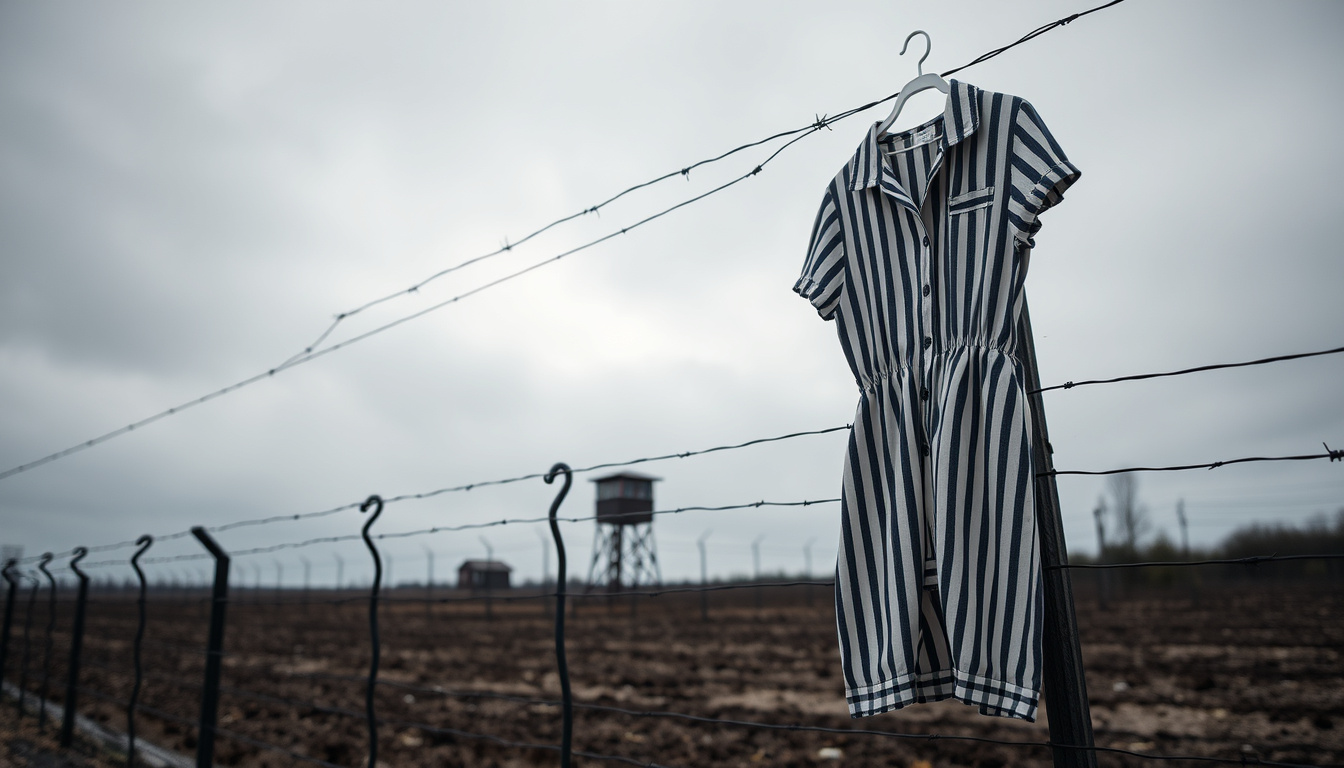
Few stories still spark the kind of debate that The Boy in the Striped Pyjamas does, more than 15 years after its publication. It’s a book that has sold over 11 million copies, a film watched in classrooms worldwide, and a narrative that many people genuinely believe is a true account of the Holocaust. This article separates fact from fiction in John Boyne’s novel, examining the historical reality of Auschwitz, the fates of its characters, and why educators and historians have raised red flags about its place in Holocaust education.
Published: 2006 (novel) ·
Film release: 2008 ·
Author: John Boyne ·
IMDb rating: 7.7/10 ·
Pages (paperback): 216 ·
Genre: Historical fiction
Quick snapshot
- The novel is fiction, not a true story (Wikipedia)
- Bruno dies in the gas chamber alongside Shmuel (Wikipedia plot summary)
- Pavel is beaten by Lieutenant Kotler and presumably dies (Wikipedia plot summary)
- Bruno’s father shaves his head while searching for him (Wikipedia plot summary)
- Whether Pavel’s death is immediate or later from injuries
- The exact time frame between Bruno’s death and father’s arrest
- What happens to Gretel and the mother after leaving
- 2006: Novel published
- 2008: Film adaptation released
- 1940s (story setting): Bruno’s family moves to Auschwitz; Bruno dies in gas chamber
- Post-war: Bruno’s father is arrested; family disperses
- Continued debate over the book’s place in school curricula
- Growing calls for more historically accurate Holocaust resources
- New educational materials from Holocaust memorial organizations
Is The Boy in the Striped Pyjamas based on a true story?
Historical context of the Holocaust
- The story is set during World War II at Auschwitz concentration camp, part of the Nazi regime’s “Final Solution” that systematically murdered six million Jews.
- Auschwitz-Birkenau was the largest Nazi death camp, where approximately 1.1 million people were killed, mostly Jews. The camp’s operations, including gas chambers and crematoria, were meticulously documented by historians.
- Children arriving at Auschwitz were almost universally deemed unfit for forced labour and were sent directly to the gas chambers upon arrival (Holocaust Centre North).
The implication: The real history makes Boyne’s central plot device — a 9-year-old Jewish boy surviving in the camp long enough to befriend the commandant’s son — historically impossible.
John Boyne’s inspiration for the novel
- John Boyne, an Irish novelist born in 1971, wrote The Boy in the Striped Pyjamas as a work of fiction. He has stated in interviews that the story is an allegory about innocence and prejudice, not a historical account (Wikipedia).
- The book was published in 2006 and became a global bestseller, translated into over 58 languages as of 2022 (Wikipedia).
- Boyne has defended the novel against criticism, arguing that it is a “fable” and not meant to be a literal historical document.
The pattern: The author’s framing of the work as allegory has not prevented widespread public misinterpretation.
Common misconceptions about historical accuracy
- A 2009 study by the London Jewish Cultural Centre found that 70% of respondents believed the novel was based on a true story (Wikipedia — citing London Jewish Cultural Centre survey).
- In the UK, over 35% of teachers use The Boy in the Striped Pyjamas to teach the Holocaust in history classes (Kveller).
- No non-Jewish German child, let alone the child of a camp commandant, ever accidentally entered a gas chamber. The scenario is historically implausible (Indiana University Libraries Media Beat).
Why this matters: The gap between authorial intent and public perception has real consequences for how the Holocaust is taught and remembered.
The book’s very success — 11 million copies sold across 58 languages — amplifies a fictional narrative that many readers mistake for historical fact, potentially distorting understanding of the Holocaust for an entire generation.
The implication: The disconnect between author’s intent and public perception underscores the need for critical historical literacy.
What actually happened to Bruno?
Bruno’s fate at the concentration camp
- Bruno, the 9-year-old son of the Auschwitz commandant, sneaks into the concentration camp to help his friend Shmuel find Shmuel’s father.
- Inside the camp, Bruno and Shmuel are swept into a group of prisoners being marched to a gas chamber. Both boys are killed in the gas chamber together.
- The narrative ends with the gas chamber door closing, leaving the reader with Bruno’s final, confused moments.
Immediate aftermath for Bruno’s family
- Bruno’s family initially believes he ran away. Soldiers search the grounds but do not find him.
- The family does not immediately know that Bruno entered the camp or that he died in the gas chamber.
- Bruno’s mother and sister Gretel eventually leave the camp. The mother is emotionally devastated, and Gretel is deeply traumatized by the experience.
Does Bruno’s father discover his son’s death?
- Bruno’s father, the camp commandant, eventually pieces together what happened. He realizes Bruno must have crawled under the fence and entered the camp.
- Following the discovery, the commandant is taken away by soldiers, implied to be arrested for his role in the Holocaust and for the death of his own son.
- The novel ends with him being led away; the film adaptation shows him screaming in despair as he discovers Bruno’s clothing at the fence.
The trade-off: By making the commandant’s personal tragedy the emotional climax, Boyne shifts reader sympathy toward a Nazi perpetrator — a choice many critics find ethically problematic.
Why did Bruno’s father shave his head?
The scene in the novel and film
- After Bruno goes missing, his father desperately searches the camp grounds. In a moment of grief and panic, he shaves his own head to try to blend in and search more effectively among the prisoners.
- In the film adaptation, the scene is visual and visceral. The once-authoritative commandant, who presided over mass murder, becomes a frantic, grieving father who literally marks himself as a prisoner.
Symbolism of the shaved head
- The shaved head symbolizes the commandant’s loss of authority and descent into grief. Where he once wielded absolute power over prisoners, he now reduces himself to their condition in a futile search for his son.
- The act mirrors the forced shaving of prisoner’s heads upon arrival at concentration camps, creating a grim parallel between perpetrator and victim.
Father’s motivation and character development
- The shaving scene serves as a turning point in the narrative’s portrayal of the commandant: he transitions from a villainous figure to a more complex, tragic character.
- Critics have argued that this humanization of a Nazi war criminal through the lens of parental grief is manipulative and historically irresponsible (Indiana University Libraries Media Beat).
The implication: The commandant’s head-shaving is a powerful cinematic moment — but it’s one that trades historical accuracy for emotional manipulation.
Bruno’s mother’s ignorance of the genocide occurring in her backyard implies a general German unawareness of the Holocaust. Historians have thoroughly debunked this notion; knowledge of the camps was widespread among the German population.
Did Pavel get beaten to death?
Pavel’s role in the story
- Pavel is a Jewish prisoner assigned to work as a servant in the commandant’s house. Before the war, he was a doctor. In the camp, his identity has been stripped away, reduced to a number and a striped uniform.
- Pavel tends to Bruno when the boy falls from a swing, revealing his medical background. Bruno does not initially understand that Pavel is a prisoner.
Details of Pavel’s death in the novel and film
- Lieutenant Kotler, a brutal SS officer, beats Pavel severely after Pavel accidentally spills wine on Kotler during a dinner at the commandant’s house.
- Pavel is dragged away by soldiers. The exact cause and timing of his death are not depicted on screen or page, but the beating is severe and clearly fatal.
- In both the book and the film, Pavel is never seen again after being taken away. His fate is implied but not confirmed.
Character analysis: Pavel as a victim
- Pavel represents the millions of educated, professional Jews reduced to dehumanized labourers under the Nazi regime. A doctor forced to serve as a butler, beaten to death for a trivial mistake — his story mirrors real historical fates.
- Pavel’s death underscores the brutality of the camp system and the arbitrary violence that defined daily life for prisoners. Lieutenant Kotler’s casual cruelty is depicted as a feature of the regime, not an exception.
Why this matters: Pavel’s arc, while fictional, aligns with documented historical patterns of violence and dehumanization in Nazi camps — unlike the central premise of Bruno’s survival inside the camp.
What happens to the commandant at the end?
Father’s role as camp commandant
- Bruno’s father, referred to only as “Father” or “the Commandant,” is a high-ranking Nazi officer who oversees the operations at Auschwitz. He is portrayed as a disciplined, ambitious military man who compartmentalizes his work from his family life.
- The novel suggests he is directly complicit in the mass murder occurring at the camp, though the full extent of his role is kept deliberately vague — a narrative choice that critics argue sanitizes the crimes of real camp commandants (Holocaust Centre North).
His reaction to Bruno’s death
- Upon realizing Bruno died in the gas chamber, the commandant is utterly destroyed. The same system he helped operate has claimed his own son.
- The emotional climax — a Nazi perpetrator experiencing the horror of the gas chamber through his child’s death — is the narrative’s central moral device. Boyne uses the commandant’s grief to make the reader feel the tragedy of the Holocaust through a perpetrator’s eyes.
Ultimate fate of the commandant in the story
- Sometime after Bruno’s death, the commandant is taken away by soldiers. The novel implies arrest, likely for his role in war crimes, though the text is ambiguous.
- The film ends with the commandant discovering Bruno’s clothes at the fence and screaming in grief. His capture is not shown directly.
- His fate reflects the broader historical collapse of the Nazi regime: many perpetrators faced trial after the war (the Nuremberg Trials, 1945–1946), but the narrative’s focus remains on his personal tragedy rather than his accountability for mass murder.
The pattern: Boyne repeatedly uses perpetrator suffering as the emotional engine of the narrative — a controversial choice that prioritizes reader sympathy over historical accuracy.
Timeline
The timeline below summarizes key events in the story and its real-world impact.
| Date or Period | Event |
|---|---|
| 1940s (story setting) | Bruno’s family moves to Auschwitz; Bruno befriends Shmuel; Bruno dies in gas chamber |
| 2006 | Publication of The Boy in the Striped Pyjamas novel (Wikipedia) |
| 2008 | Film adaptation released, directed by Mark Herman (Holocaust Centre North) |
| 2009 | London Jewish Cultural Centre study finds 70% of readers believed book is based on true story (Wikipedia) |
| Post-war | Bruno’s father is arrested; family disperses (Wikipedia plot summary) |
Confirmed facts vs. what’s unclear
Six key points, one pattern: the confirmed facts are the ones that can be verified against the text, while the unclear elements represent gaps in Boyne’s storytelling that leave room for reader confusion.
Confirmed facts
- The novel is fiction, not a true story (Wikipedia)
- Bruno dies in the gas chamber (Wikipedia — plot summary)
- Pavel is beaten by Kotler and presumably dies (Wikipedia plot summary)
- Bruno’s father shaves his head while searching for him (Wikipedia plot summary)
- The commandant is arrested after Bruno’s death (Wikipedia plot summary)
What’s unclear
- Whether Pavel’s death is immediate or later from injuries
- The exact time frame between Bruno’s death and father’s arrest
- What happens to Gretel and the mother after leaving
Quotes from key voices
“The book has sold more than 11 million copies worldwide and has been translated into over 58 languages.”
— Wikipedia — publishing statistics
“If a young boy like Shmuel had entered Auschwitz-Birkenau, he would very likely have been sent straight to the gas chambers on arrival, as the Nazis did not consider children useful as forced labour.”
— Holocaust Centre North — historical analysis
“No non-Jewish German child, much less the child of a camp commandant, ever accidentally ended up in a gas chamber.”
“Bruno’s mother’s ignorance of the mass murder occurring in her backyard suggests a general lack of awareness on the part of Germans more broadly of the unfolding genocide, a position that historians have debunked.”
— Indiana University Libraries Media Beat
Summary
The Boy in the Striped Pyjamas is a work of fiction that has been widely mistaken for fact — a confusion that carries real consequences for Holocaust education. For educators in the UK and worldwide who use the book to teach about the Holocaust, the choice is clear: either supplement it with historically accurate resources from institutions like the Holocaust Centre North, or replace it with accounts that do not trade historical truth for emotional impact. For readers interested in how other cultural narratives shape public understanding, see our analysis of Vecna Stranger Things: Identity, Backstory & Season 5 Fate.
Related reading: Vecna Stranger Things: Identity, Backstory & Season 5 Fate
For a deeper look at the historical accuracy, explore the true story behind the novel and how it compares to real events.
Frequently asked questions
Who wrote The Boy in the Striped Pyjamas?
The novel was written by Irish author John Boyne, born in Dublin in 1971. It was his fourth published novel (Wikipedia — John Boyne).
Where can I watch the movie The Boy in the Striped Pyjamas?
The 2008 film adaptation is available on major streaming platforms including Netflix, Amazon Prime Video, and Apple TV. Check your local streaming service for availability.
What is the main message of the story?
The novel explores themes of innocence, prejudice, and the arbitrary boundaries society creates between people. It uses the friendship between Bruno and Shmuel to illustrate how children can see past divisions that adults enforce.
How does the book differ from the film?
The film adaptation, directed by Mark Herman, closely follows the book’s plot but expands certain scenes, particularly the shaving scene and the commandant’s final scream of grief. The book is told from Bruno’s limited perspective; the film includes wider shots of the camp.
What age is appropriate to read the book?
The book is often classified as a children’s or young adult novel, but most Holocaust educators recommend ages 14 and older due to its distressing themes and historical inaccuracies that require critical discussion.
What is the setting of the story?
The story is set mainly at Auschwitz concentration camp in Nazi-occupied Poland during World War II, specifically at the commandant’s house and the adjacent camp grounds.
Why is the novel controversial?
Holocaust scholars have criticized the book for its historical inaccuracies, particularly the implausible premise of a German commandant’s son befriending a Jewish prisoner inside Auschwitz, and for potentially damaging Holocaust education by misleading readers about the reality of the camps (Wikipedia — criticism section).
Is the movie appropriate for children?
The film is rated PG-13 for thematic material involving the Holocaust, including disturbing images. Many educators recommend it for ages 13 and above, with adult guidance and context about historical inaccuracies.

Jack Hayes is Senior Reporter at Australia Data, covering breaking stories and explainers.