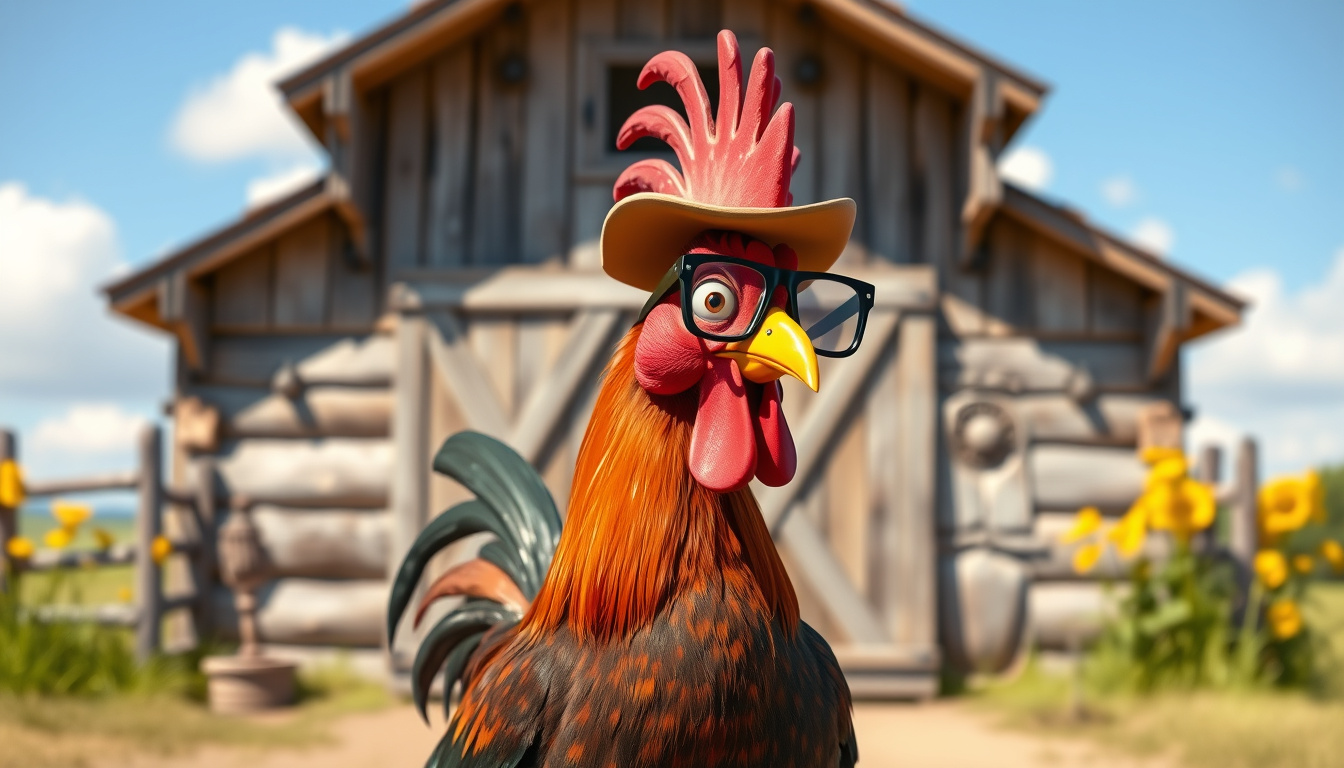
You know that big rooster with the booming voice who always has something to say? Foghorn Leghorn has been a Looney Tunes fixture since 1946, and almost everything about him—from his name to his catchphrases—comes from a blend of radio comedy and real-world Southern caricature. This article traces how that character went from a Texas-style radio bit to one of animation’s most recognizable loudmouths.
First appearance: Walky Talky Hawky (1946) ·
Creator: Robert McKimson ·
Voice actor: Mel Blanc ·
Species: Anthropomorphic rooster
Quick snapshot
- Based on Senator Claghorn from The Fred Allen Show (Looney Tunes Wiki)
- First appearance in 1946’s Walky Talky Hawky (Wikipedia)
- Voiced by Mel Blanc (Wikipedia)
- Created by Robert McKimson (Wikipedia)
- Exact number of classic-era cartoons varies by counting method (Cartoon Brew)
- Some details of McKimson’s original inspiration remain anecdotal (Cartoon Brew)
- 1946: First cartoon released
- 1946–1964: Appeared in 28–29 classic shorts
- Voice and persona rooted in 1930s–40s radio comedy
- Digital compilations and streaming exposure keep character alive
- Pop culture references in advertising and modern animation continue
The pattern below shows the key identifiers that define this character from radio parody to animated icon.
| Attribute | Value |
|---|---|
| Full name | Foghorn Leghorn |
| Species | Anthropomorphic rooster |
| First appearance | Walky Talky Hawky (1946) |
| Creator | Robert McKimson |
| Voice actor | Mel Blanc |
| Number of cartoons (classic era) | 28 (Wikipedia) |
Why is the rooster called Foghorn Leghorn?
Origin of the name
- The name is a pun combining “foghorn” (a loud warning horn) and “Leghorn” (a breed of chicken).
- His loud voice resembles the blast of a foghorn, making the connection immediate for audiences.
The double meaning hits on two levels: the noise he makes and the bird he is. Animator Robert McKimson chose “Leghorn” because it names a real chicken breed originating from Livorno, Italy—but the character himself was conceived as a distinctly American Southern rooster. The contradiction is part of the comedy.
Meaning of “Foghorn” and “Leghorn”
- “Foghorn” emphasizes the character’s loud, booming voice.
- “Leghorn” identifies his species while adding a layer of absurdity—an Italian chicken with a Southern drawl.
The choice of “Leghorn” over “rooster” or “chicken” gave McKimson a specific breed name that also sounded funny. According to Cartoon Research (animation history specialists), the name landed immediately with audiences who understood both the nautical reference and the bird reference without needing an explanation.
The implication: the name itself is a mini-comedy routine—short, layered, and revealing of the character’s identity. It tells you almost everything you need to know before the rooster opens his beak.
What politician was Foghorn Leghorn based on?
Senator Claghorn inspiration
- Foghorn Leghorn was directly inspired by Senator Claghorn from the radio show The Fred Allen Show.
- Senator Claghorn was a caricature of a blustery Southern politician.
The link between a radio character and a cartoon rooster might seem odd, but it is one of the most documented origin stories in animation. Senator Claghorn, played by Kenny Delmar on The Fred Allen Show, was a bombastic Southern senator who spoke in a rapid-fire, repetitive style. McKimson heard that voice and saw a rooster.
The Senator Claghorn character was itself a parody of real Southern politicians of the 1930s and 1940s. Foghorn Leghorn is therefore a parody of a parody—a second-order caricature that most viewers took as an original creation.
Connection to radio character
- The voice and mannerisms were adopted wholesale from the radio character.
- Mel Blanc’s performance leaned heavily into the Claghorn cadence.
Cartoon Brew (animation journalism outlet) reports that McKimson once said he also heard a tobacco auctioneer in Kentucky speaking with that same rhythm. The blend of radio parody and real-world auctioneer patter gave Foghorn Leghorn a voice that felt both theatrical and grounded.
What this means: Foghorn Leghorn didn’t emerge from a blank page. He is the product of a specific radio comedy tradition that cartoonists adapted for visual humor. The politician connection gives the character a satirical edge that is easy to miss when watching him get outsmarted by a chicken hawk.
Why does Foghorn Leghorn say “I say”?
Origin of the catchphrase
- The repeated “I say” is a hallmark of Foghorn Leghorn’s speech pattern.
- It was adopted from Senator Claghorn, who used similar phrasing.
The “I say, I say, I say” tic is not random stuttering—it is a deliberate verbal stall that mimics the cadence of a blowhard who wants to sound important. YourDictionary (language reference publisher) notes that Claghorn’s dialogue on The Fred Allen Show used the same repetitive structure, making the catchphrase a direct hand-me-down from radio to animation.
Use in cartoons
- The catchphrase reinforces his bombastic Southern persona.
- It became a signature that made him instantly identifiable.
In practice, the “I say” construction gave writers a tool: every time Foghorn Leghorn started a sentence, the audience knew they were in for a long, winding, self-important monologue. Ranker (pop culture list site) catalogues dozens of examples where the phrase sets up the joke. It is not what he says—it is how he says it, with pauses that emphasize his confidence.
The pattern: the catchphrase works because it signals a personality type that viewers recognized from real life—the person who talks a lot but says little. That is the engine of every Foghorn Leghorn scene.
What song did Foghorn Leghorn always sing?
The Foghorn Leghorn song
- Foghorn Leghorn often sings a self-referential tune called “The Foghorn Leghorn.”
- The song is set to the tune of “The Irish Washerwoman,” a traditional jig.
In several cartoons, Foghorn Leghorn breaks into song, and the melody is always the same: a bouncy, upbeat tune that contrasts with his loud, overbearing speaking voice. YourDictionary identifies the melody as “The Irish Washerwoman,” a traditional Irish folk tune that Warner Bros. music directors repurposed for comic effect.
Lyrics and tune
- The lyrics are about being a Foghorn Leghorn—self-promotional and absurd.
- The tune appears in multiple cartoons as a running gag.
The song works because the character is singing about himself, which fits his narcissistic personality. YouTube compilations (fan-curated video archives) show that the song appears in at least five distinct shorts, making it one of the most consistent musical gags in the Looney Tunes library.
Why this matters: the song isn’t just filler—it is a character beat. Foghorn Leghorn is so self-absorbed that he has a theme song about himself, and he is happy to perform it at any opportunity. That is the joke.
What was Foghorn Leghorn famous for saying?
Famous quotes
- “That’s a joke, son” — delivered after almost every punchline.
- “I say, I say, I say, boy” — the standard opening.
- “Pay attention, boy” — usually directed at Henery Hawk.
- “Nice boy, but dumb” — his assessment of nearly everyone.
These lines are so embedded in pop culture that they’ve outlived the cartoons themselves. FoghornLeghornQuotes.com (dedicated quote archive) lists dozens of variations, but the core set remains consistent across decades of shorts. The repetition is the point: Foghorn Leghorn says the same things because he thinks they’re brilliant every time.
Catchphrases
- He frequently uses malapropisms and mispronunciations.
- His dialogue is known for its Southern drawl and bluster.
The malapropisms—words used incorrectly for comic effect—are a hallmark. Ranker’s collection includes gems like “elucidate” and “propensity” used in the wrong context, making the rooster sound educated but actually confused. It is the same trick used by Shakespeare’s Bottom and countless stage comedians: a character who thinks they’re smarter than they are.
Foghorn Leghorn’s catchphrases made him iconic but also one-dimensional. His dialogue is so predictable that the comedy comes from the audience knowing what he’ll say before he says it. That familiarity is exactly what turned him into a meme before memes existed.
The takeaway: Foghorn Leghorn’s verbal arsenal is small but perfectly tuned. Every line feeds the same persona—the loud, self-satisfied blowhard who never learns. That is why he has survived 70+ years in the cultural memory.
That’s a joke, son.
— Foghorn Leghorn, catchphrase used across multiple cartoons
I say, I say, I say, boy.
— Foghorn Leghorn, standard opening line
Nice boy, but dumb.
— Foghorn Leghorn, referring to Henery Hawk
Pay attention, boy.
— Foghorn Leghorn, instruction to others
What ties these quotes together is a single thread: the rooster is always performing. Even alone, he talks as if addressing an audience. That self-awareness—the character knowing he is entertaining—is what separates Foghorn Leghorn from a mere noise machine. He is a ham, and he knows it.
Confirmed facts
- Created by Robert McKimson for Warner Bros.
- First appeared in Walky Talky Hawky (1946)
- Voiced by Mel Blanc
- Inspired by Senator Claghorn from The Fred Allen Show
- Appeared in 28 classic-era cartoons
- Name is a pun on “foghorn” and “Leghorn” chicken breed
What’s unclear
- Exact count of cartoons varies (28 vs. 29 depending on source)
- Some origin details (tobacco auctioneer story) are secondhand
- Full list of catchphrases varies across fan collections
Related reading: Andy Warhol: Life, Art, and Legacy Explained · Indiana Jones Movies in Order: Complete Guide
cartoonresearch.com, facebook.com, animated.substack.com, hero.fandom.com, youtube.com
Fans curious about the origins of his iconic catchphrase will find a deeper exploration of the 1940s radio satire that inspired him at origins of his iconic catchphrase.
Frequently asked questions
How was Foghorn Leghorn created?
Animator Robert McKimson created the character for Warner Bros. after being inspired by the Senator Claghorn radio character on The Fred Allen Show. McKimson also reportedly based the voice pattern on a tobacco auctioneer he heard in Kentucky, blending radio parody with real-world Southern speech.
What is Foghorn Leghorn’s personality?
He is loud, bombastic, self-absorbed, and arrogant. He talks constantly, thinks he is the smartest person in any room, and frequently uses malapropisms. His confidence is almost always misplaced, leading to his downfall in each cartoon.
Who are Foghorn Leghorn’s main enemies?
His primary antagonist is the Barnyard Dog (often named George), who constantly outsmarts him. He also frequently clashes with Henery Hawk, a young chicken hawk who wants to eat him, and Miss Prissy, a hen who pursues him romantically.
Is Foghorn Leghorn a hero or villain?
Neither. He is a comedic protagonist whose arrogance is the source of humor. He is not malicious, but his self-importance makes him the target of jokes. The audience laughs at him, not with him.
What is the most famous Foghorn Leghorn cartoon?
There is no single definitive cartoon, but Walky Talky Hawky (his debut), The Foghorn Leghorn (1948), and All Fowled Up (1955) are among the most widely seen. His 28 classic shorts remain in syndication.
Why is Foghorn Leghorn popular?
His unique voice, memorable catchphrases, and distinctive Southern persona made him instantly recognizable during the Golden Age of Animation. The character has persisted through streaming, compilations, and pop culture references in advertising and other media.
How did Foghorn Leghorn influence pop culture?
His catchphrases (“That’s a joke, son,” “I say, I say”) entered everyday speech. He has been referenced in The Simpsons, Family Guy, and countless advertisements. He also represents a specific type of Southern caricature that influenced how American animation portrayed regional voices.

Priya Mitchell leads fact-checking, source verification and corrections at Australia Data.