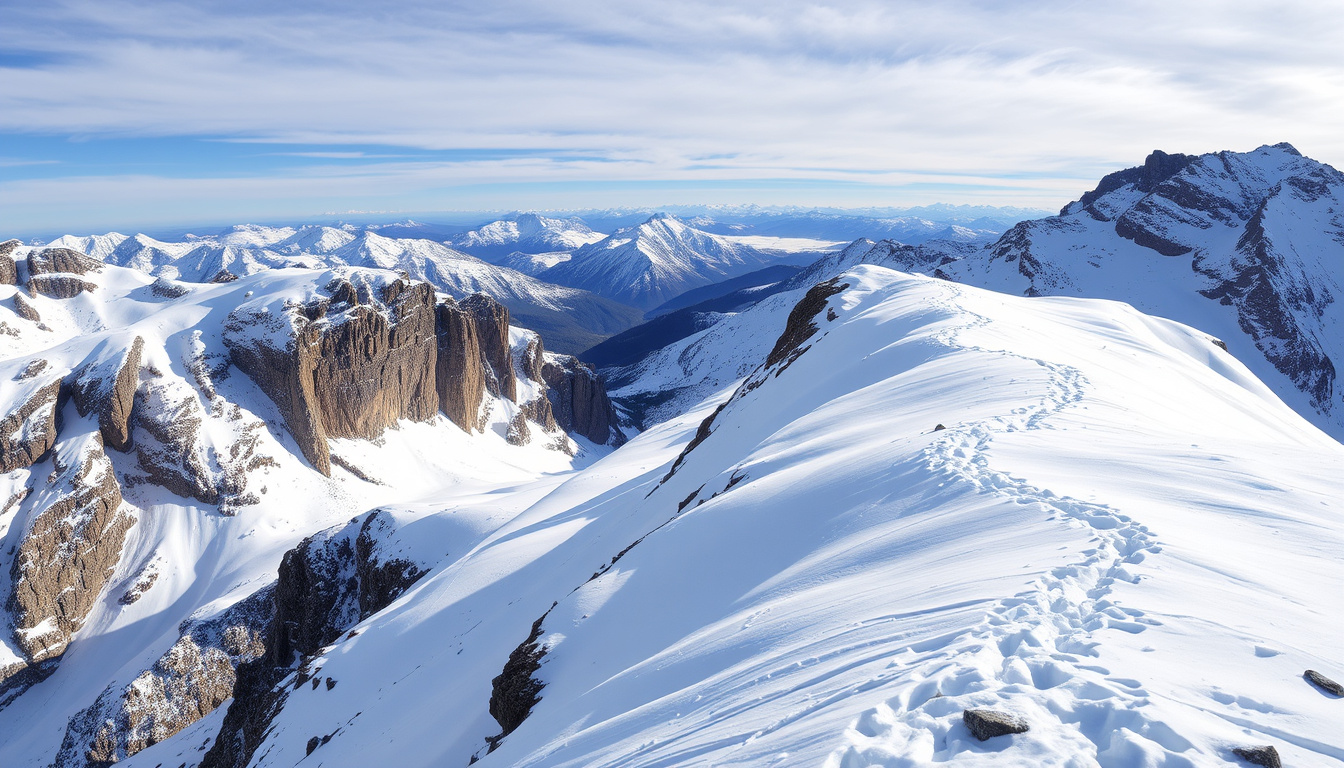
It’s rare to find a place where you can drive to the top of an alpine plateau, walk among plants found nowhere else on Earth, and do it all without paying an entry fee. At 1,723 m high, Mount Buffalo in the Victorian Alps is that kind of place — a granite fortress that doubles as a living laboratory for more than 550 native plant species, according to Parks Victoria (state park authority). Whether you’re after summer waterfall walks or winter tobogganing, this guide delivers the practical facts — snow conditions, trail times, and the real story behind its name.
Height: 1,723 m ·
Area: 31,000 ha ·
Established: 1898 ·
Entry Fee: Free
Quick snapshot
- Free entry year-round (Visit Mount Buffalo (tourism page))
- Named by Hume and Hovell in 1824 (Wikipedia (encyclopedia entry))
- Home to 550+ native plant species (Parks Victoria (state park authority))
- Alpine plateau in the Australian Alps (Wikipedia (encyclopedia entry))
- Exact hiking times vary by trail and fitness (Mount Buffalo Ski School (local operator))
- Current snow conditions depend on season and weather, not always predicted (Visit Mount Buffalo (tourism page))
- Trail accessibility under deep snow is unverified until you check park alerts (Mount Buffalo Ski School (local operator))
- 1824 – Named by explorers Hume and Hovell (Wikipedia (encyclopedia entry))
- 1898 – Declared a national park (Parks Victoria (state park authority))
- 1910 – Mount Buffalo Chalet opened (Wikipedia (encyclopedia entry))
- 2008 – Chalet closed as a hotel (Wikipedia (encyclopedia entry))
- Summer hiking and waterfall season peaks December–March
- Winter snow activities (skiing, tobogganing) June–September
- Spring and autumn offer mild weather and wildflower blooms
Four stats, one pattern: everything at Mount Buffalo is framed around free access and seasonal contrast.
| Attribute | Value |
|---|---|
| Height | 1,723 m |
| Peak | Mount Buffalo summit |
| Area | 31,000 ha |
| Established | 1898 |
Is Mount Buffalo worth visiting?
Scenic views and viewpoints
- Panoramic views from the plateau across the Victorian Alps (Visit Mount Buffalo (tourism page))
- Multiple lookouts: The Horn, Eurobin Lookout, and the Chalet terrace
The plateau rises sharply from the surrounding valley, offering 360‑degree sightlines that few other Australian mountains match. The catch: you need clear weather to see them.
Unique wildlife and plants
- Over 550 native plant species, including endemics found nowhere else (Parks Victoria (state park authority))
- Wildlife: wallabies, kangaroos, wedge‑tailed eagles
This is the living‑laboratory angle: the isolation of the plateau has turned it into a natural conservatory of rare alpine flora. For botany enthusiasts, it’s a genuine draw.
Year-round activities
- Summer: bushwalking, canoeing, swimming at Lake Catani, cycling (Parks Victoria (state park authority))
- Winter: skiing, snowboarding, tobogganing at Cresta Valley and Dingo Dell (Victoria’s High Country (tourism collaborative))
For Melbourne families eyeing a low‑cost weekend escape, the combination of free entry + diverse seasons makes Mount Buffalo one of the few alpine parks that works year‑round without extra fees. The trade‑off: you trade the resort amenities of places like Falls Creek for genuine quiet and self‑drive access.
The implication: if you value solitude, endemic nature, and free access over chairlifts and après‑ski, Mount Buffalo is absolutely worth a visit.
Can you drive up Mount Buffalo?
Road access and conditions
- Sealed road from the park entrance to the summit plateau (Visit Mount Buffalo (tourism page))
- Open year‑round, but during the declared snow season chains are required (Victoria’s High Country (tourism collaborative))
- Road may close temporarily during extreme weather events
Parking and viewpoints
- Plenty of car parking available at the top, even in winter (Visit Mount Buffalo (tourism page))
- Multiple scenic lookouts along the drive: Eurobin, The Horn, and Chalet area
Access is straightforward for any 2WD vehicle, provided you carry chains in winter. No 4WD required.
Why is Mount Buffalo called Mount Buffalo?
Origin of the name
- Named by explorers Hamilton Hume and William Hovell in 1824 (Wikipedia (encyclopedia entry))
- They thought it resembled a sleeping buffalo from a distance
Historical exploration
- Hume and Hovell passed through on their 1824 expedition from Sydney to Port Phillip
- Their reports later attracted pastoral settlers and tourists
The name stuck because the massive granite profile, when viewed from the surrounding plains, does look remarkably like a recumbent bison. It’s one of the park’s most photographed perspectives — not from the summit, but from the road below.
Does Mount Buffalo get snow?
Snowfall patterns
- Snow typically blankets most of the plateau during winter months (June–September) (Victoria’s High Country (tourism collaborative))
- Snow depths are moderate compared to alpine resorts — not reliable for serious downhill skiing
Winter activities
- Tobogganing and snow play at Cresta Valley and Dingo Dell (Victoria’s High Country (tourism collaborative))
- Marked cross‑country skiing trails on the plateau
- Mount Buffalo Ski School operates lessons and equipment hire (Mount Buffalo Ski School (local operator))
For families who want a snow day without lift‑ticket prices, Mount Buffalo is the budget alternative. The snow is real but unpredictable — check the Bureau of Meteorology (national weather service) before you go.
How long does it take to walk up Mount Buffalo?
The Big Walk trail
- The Big Walk is a 9.6 km one‑way trail from Lake Catani to the Chalet (Parks Victoria (state park authority))
- Typical time: 3–5 hours, depending on fitness and conditions
- Elevation gain: about 500 m
Other hiking options
- Short walks: Gorge Heritage Walk, Rolling Rock Lookout (30–60 min)
- Full‑day hikes: The Horn circuit, Lake Catani loop
Winter hikers should be cautious — snow is not cleared from the trail network, making paths difficult to follow (Mount Buffalo Ski School (local operator)).
Is Mount Buffalo free entry?
Park fees
- Mount Buffalo National Park has free entry for all visitors, including during snow season (Visit Mount Buffalo (tourism page))
- No booking required for day visits
- Camping fees apply at Lake Catani (seasonal sites)
What’s included
- Access to all walking trails, lookouts, picnic areas
- Free parking at the Chalet area and Dingo Dell
- Café at Dingo Dell is open seasonally (peak demand during snow) (Britz Campervans (travel guide))
The pattern across these sections: Mount Buffalo positions itself as a free, self‑drive alpine experience — a deliberate contrast to commercial ski resorts. For budget‑conscious travellers, that’s the main draw.
Upsides
- Free entry and parking
- Unique endemic plants and wildlife
- Year‑round activities (summer hiking, winter snow play)
- Easy sealed road access to the summit
- Historic Chalet and scenic lookouts
Downsides
- Chains required in winter (added cost and hassle)
- No public transport to the park
- Snow conditions can be unreliable
- Limited winter infrastructure compared to ski resorts
- Trail network not cleared of snow in winter
How to plan your Mount Buffalo trip (steps)
- Check conditions: Visit Parks Victoria (state park site) for alerts and Bureau of Meteorology (weather service) for snow forecast.
- Prepare your vehicle: In the snow season (June–September), carry chains and know how to fit them.
- Download maps: Use Visit Mount Buffalo (trail map page) to plan your route — trails can become hard to follow under snow.
- Pack essentials: Water, food, warm layers, sun protection, and a spare set of clothes for snowy conditions.
- Time your visit: Aim for mid‑week to avoid crowds, especially during school holidays.
Timeline
- 1824 – Named by Hamilton Hume and William Hovell (Wikipedia (encyclopedia entry))
- 1898 – Declared a national park (Parks Victoria (state park site))
- 1910 – Mount Buffalo Chalet opened
- 2008 – Chalet closed as a hotel; now operates as a day visitor facility
Clarity check
Confirmed facts
- Mount Buffalo is a plateau in the Australian Alps
- Free entry to the national park year‑round (Visit Mount Buffalo (tourism page))
- Named for its resemblance to a sleeping buffalo (Wikipedia (encyclopedia entry))
- Home to over 550 native plant species (Parks Victoria (state park document))
- Chains required during declared snow season (Victoria’s High Country (tourism collaborative))
What’s still unclear
- Exact hiking times depend on trail, fitness, and weather
- Current snow depth and quality vary daily — check forecast before travelling
- Whether all trails are passable under heavy snow: not guaranteed
What experts say
“Mount Buffalo is home to 550 species of native plants, including plants found nowhere else on Earth.”
— Parks Victoria (state park authority)
“It was named by Hume and Hovell in 1824 because of its resemblance to a sleeping buffalo from a distance.”
— Wikipedia (encyclopedia entry)
“Winter conditions can make bushwalking tracks difficult to follow because snow is not cleared from the trail network.”
— Mount Buffalo Ski School (local operator)
For Victorian families looking for an affordable alpine escape, the choice is clear: pack the car, bring chains in winter, and enjoy a day on the plateau without spending a cent on entry.
facebook.com, scribd.com, discoveryholidayparks.com.au, mountbuffalochalet.com, visitbright.com.au, visitmountbuffalo.com.au, facebook.com
Frequently asked questions
What is the best time to visit Mount Buffalo?
Summer (December–March) for hiking and waterfalls; winter (June–September) for snow play. Spring and autumn offer mild weather and wildflowers.
Are dogs allowed in Mount Buffalo National Park?
No, dogs are not permitted in the national park to protect native wildlife and plants.
Can you camp at Mount Buffalo?
Yes, camping is available at Lake Catani campsite (bookable through Parks Victoria). Fees apply for camping.
What activities are available in summer?
Bushwalking, canoeing, swimming at Lake Catani, picnicking, sightseeing, and cycling along park roads.
Is there a cafe at Mount Buffalo?
Yes, the Dingo Dell café operates seasonally, with highest demand during the snow season (Britz Campervans (travel guide)).
How do I get to Mount Buffalo by public transport?
There is no direct public transport. The nearest town with bus service is Bright; from there you need a car or taxi to the park entrance.

Jack Hayes is Senior Reporter at Australia Data, covering breaking stories and explainers.